I. Value and Industry Challenges of Class II Super Engineering Grade Reflective Sheeting
1. Value
In adverse weather conditions, Class I Engineering Grade reflective sheeting may result in low visibility, increasing the risk of traffic accidents.
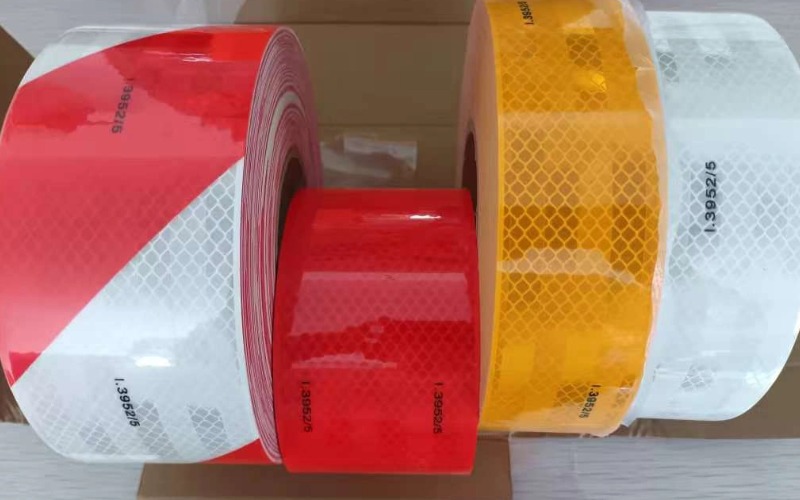
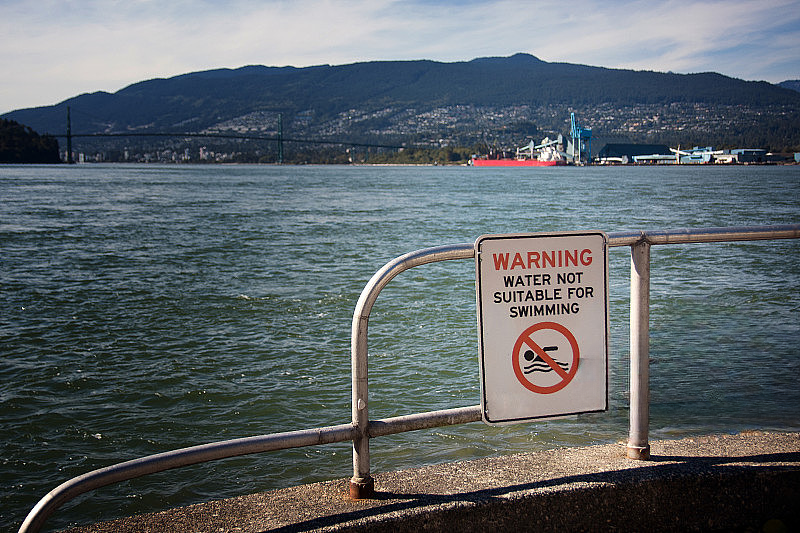
Class II Super Engineering Grade reflective sheeting, however, slightly extends effective recognition distance and significantly improves the visibility of signs in low-visibility conditions, such as at night or in rain and fog, helping reduce accident risks and enhancing road safety.
As a key material for traffic signage, reflective sheeting enhances visual recognition of signs through retroreflection, playing an essential role in ensuring road traffic safety.

2. Industry Challenges
The current market is highly saturated, with inconsistent product quality. Common issues include:
Test reports that do not match the actual material.
Low-cost, low-quality products flooding the market.
Inferior reflective sheeting may have insufficient coverage, creating hidden safety hazards.
This guide focuses on scientific identification methods and proper usage standards for Class II Super Engineering Grade reflective sheeting to provide practical guidance for improving road safety.
II. What is Class II Super Engineering Grade Reflective Sheeting
1. Positioning
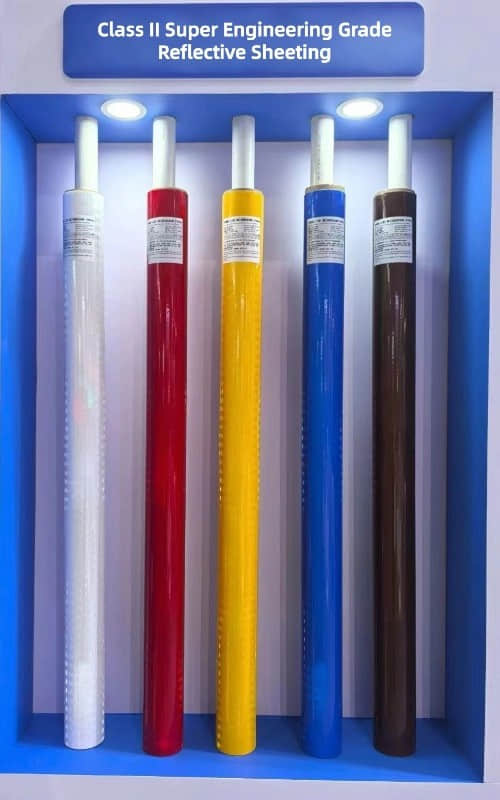
Class II Super Engineering Grade reflective sheeting is positioned as a key material for improving road sign safety, offering performance higher than Class I Engineering Grade and a cost-effective alternative approaching Class III High-Intensity Grade.
According to GB/T 18833-2012 (National Standard for Road Traffic Reflective Sheeting):
White Class II sheeting must have a retroreflective coefficient of at least 140 cd·lx⁻¹·m⁻² at an observation angle of 0.2° and an entrance angle of –4°, with an outdoor lifespan of up to 7 years.
In comparison, Class I Engineering Grade white sheeting has a retroreflective coefficient ≥70 cd·lx⁻¹·m⁻² and a 3-year outdoor lifespan.
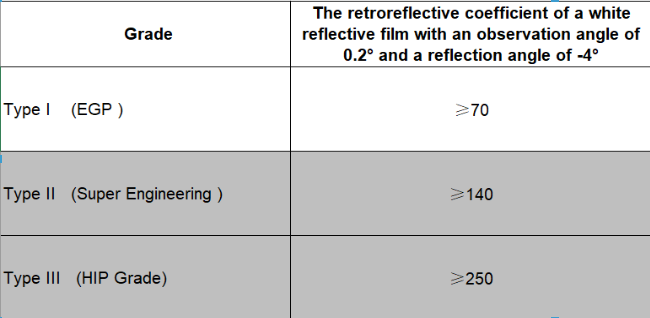
Class II Super Engineering Grade reflective sheeting clearly outperforms Class I, with double the retroreflective coefficient and the same 7-year durability as Class III High-Intensity Grade.
For projects requiring long-term outdoor durability but limited budgets, Class II reflective sheeting is a practical alternative.
III. How to Scientifically Identify Class II Super Engineering Grade Reflective Sheeting
1. Appearance Quality
Preliminary screening can be performed through visual inspection:
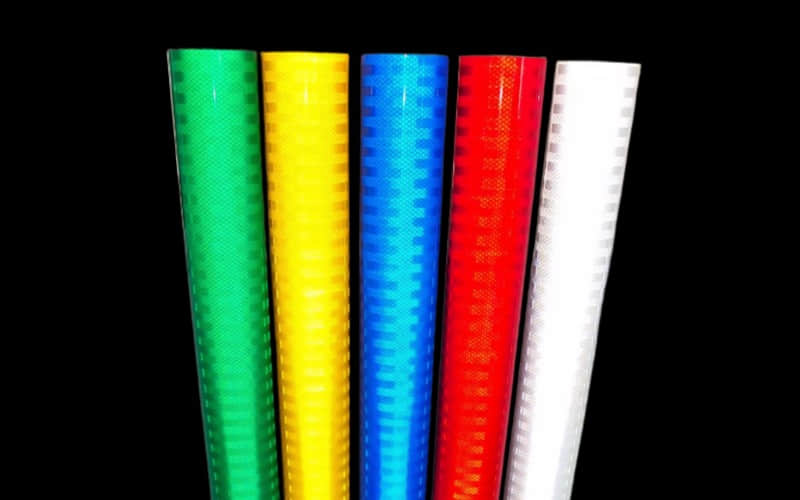
Color check: Common colors include white, yellow, and blue. Compare with a standard color chart to ensure compliance.
Edge flatness: Measure warping with a ruler. Edges should be smooth and free of distortion.
Color uniformity + edge check: Combining these checks helps preliminarily identify qualified Class II sheeting.
2. Key Performance
Testing for retroreflective coefficient and weather resistance is essential:
Retroreflective coefficient: Use a retroreflectometer at 0.2°/–4°. White Class II sheeting must reach ≥140 cd·lx⁻¹·m⁻². Inferior materials often fail this requirement.
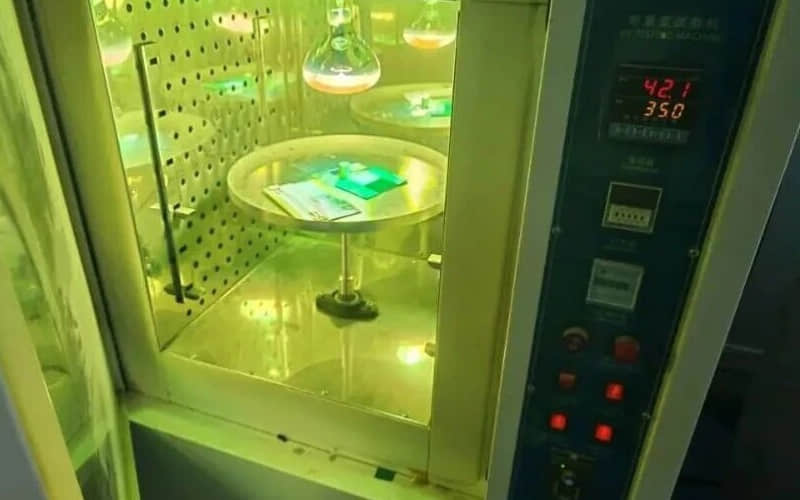
Weathering test: Conduct accelerated aging using a xenon-arc lamp aging chamber (black panel temperature 65°C ± 3°C, relative humidity 50% ± 5%). After aging, the sheeting must have:
No cracks, wrinkles, scoring, dents, bubbles, erosion, delamination, chalking, or deformation.
Retroreflective value ≥65% of original.
3. Test Reports
Although new regulations do not mandate GB standard testing reports, they are recommended for risk control:
Review test reports for retroreflective coefficients, color coordinates, and actual test conditions.
Ensure compliance with GB/T 18833-2012.
Verify testing institution qualifications and report validity.
For critical projects, request third-party verification.
Genuine GB-standard reflective sheeting also provides warranty, e.g., GB5100 offers warranty according to national standards.
IV. Precautions When Using Class II Super Engineering Grade Reflective Sheeting
1. Installation Environment
Installation temperature affects bonding quality.
Recommended: 10°C–36°C.
In low temperatures, preheat adhesive backing to activate bonding.
2. Processing
Main processing methods include screen printing and digital/UV printing:
Screen printing: Control mesh count to avoid ink cracking.
UV printing: Combines digital printing with reflective sheeting to improve production efficiency.
3. Storage
Store in a ventilated, dry, cool environment.
Place cartons on pallets; avoid excessive stacking to prevent moisture or compression damage.
For partially used rolls: re-roll tightly on original cores, seal in moisture-proof bags, avoid direct pressure, and limit storage after opening to 1 year.
4. Application
For air bubbles, puncture with a needle and press out air with a clean cloth; do not peel off and reapply.
Avoid wet-application methods.
Prevent overstretching and tearing.
For surface stains, gently wipe with alcohol-based solvents or neutral detergent.
V. Application Scenarios
1. Rural Road Signage
Rural roads often lack night lighting, lowering visibility and increasing accident risk. Class II reflective sheeting improves nighttime visibility, extends driver reaction time, and reduces long-term maintenance costs.

2. Municipal Road Signs
For low-grade municipal roads, Class II sheeting provides retroreflective performance close to Class III while being more cost-effective, making it ideal for budget-sensitive projects.
3. Scenic Area Signs
Scenic area signs are important for guiding tourists. Class II brown reflective sheeting meets color standards and ensures visibility under low-light conditions, improving visitor experience and safety.
END – Summary
Balancing performance and cost requires attention to the full lifecycle value of reflective sheeting.
Choosing GB-standard materials enhances traffic safety, durability, and reduces nighttime accidents.
Class II Super Engineering Grade reflective sheeting offers an optimal combination of performance, weather resistance, and cost-effectiveness.